
Set Review ? 42235 Ferrari 488 Pista
Ferrari has been quite a frequent topic of many news outlets recently - or one should say, even more frequent than usual. The reason is something the legendary carmaker from Italy is probably not too proud of: its newly presented car Luce, the first full-electric Ferrari, got heavily criticized, almost ridiculed, for its looks. Some compared it to an interesting kitchen appliance, some to a far-eastern hatchback (I drive one so I don’t know what to think about that), but there seems to be a general consensus that it is anything but “Ferraric”.
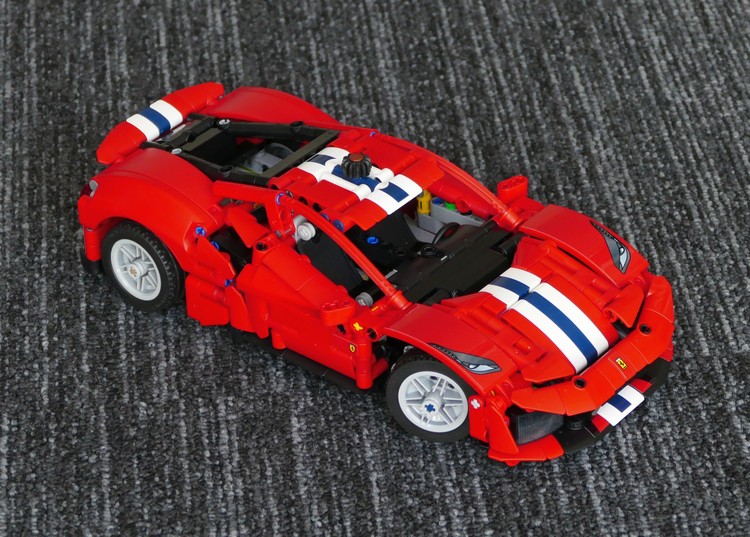
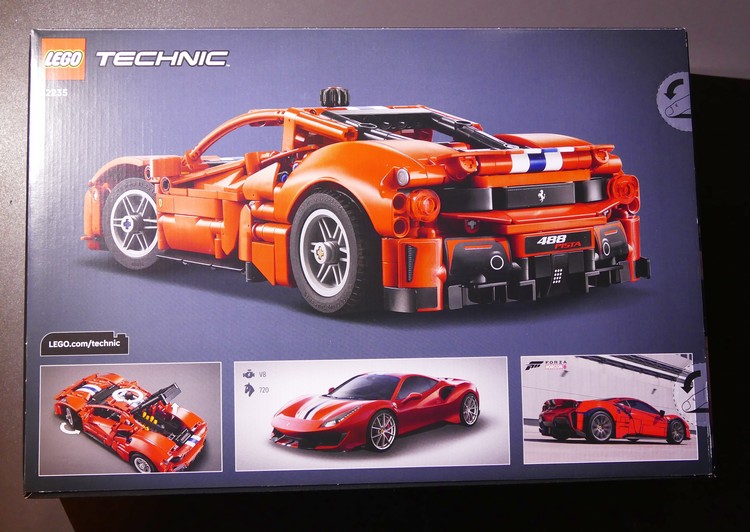
However, the Ferrari that this set 42235 models is, if anything, a contrary case. It is absolutely, bleedingly obvious a Ferrari, from any angle and distance, even for people who aren’t that much into cars. More specifically, it’s the 488 Pista, a 720-horsepower track-focused and lighter version of the 488GTB, which is itself a brutal supercar. All this makes the Pista accelerate to 100km/h in spine-breaking 2.85 seconds.
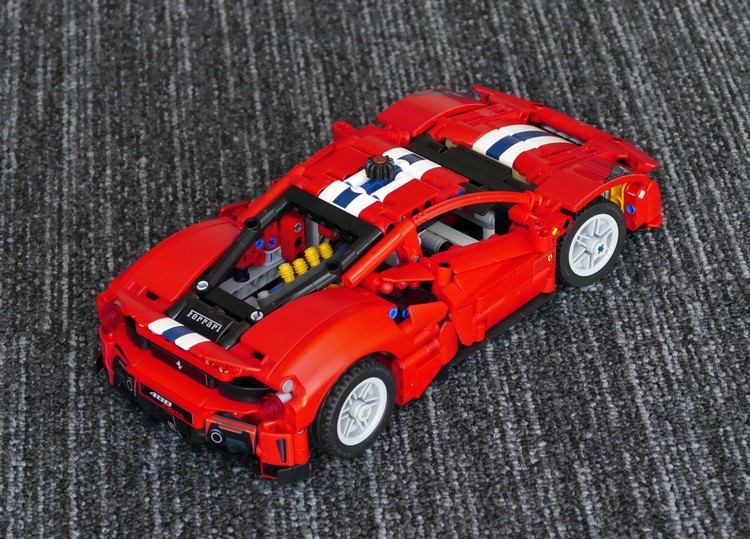
Even though this LEGO set is new, the real car is already a little over eight years old, and the 488 (as well as the 488 Pista) has been replaced by newer comparable models in Ferrari’s portfolio. However, it remains one of those ultra-special versions that will, no doubt, interest collectors for a long time to come and spend their days in a well-air-conditioned garage.
The LEGO set itself is one of several new sports cars in this, currently quite popular car scale in Technic which is approximately 1:16 - we already saw and reviewed some here in HispaBrick, and will continue to do so as there are some more waiting in our “inbox”.
So! What does one experience building this LEGO Technic set of a no-nonsense track-focused Ferrari?
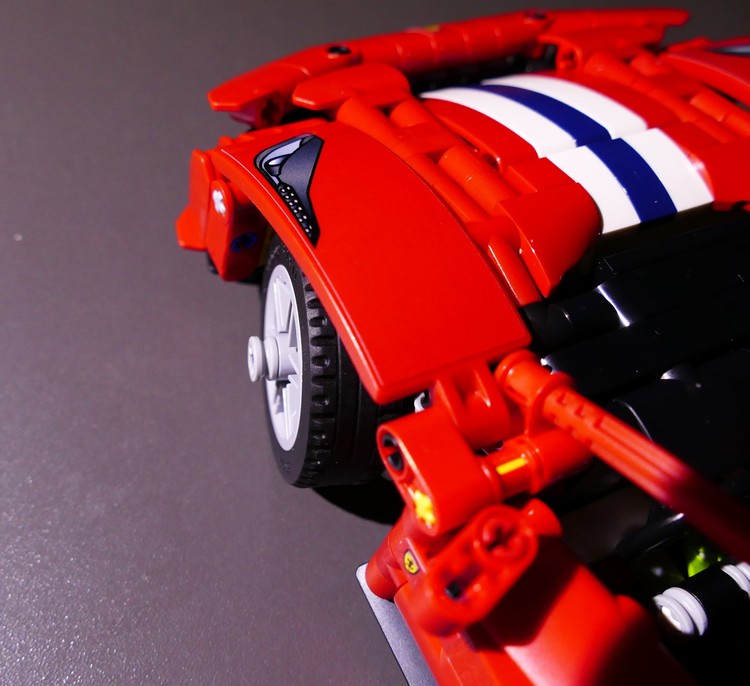
Let’s begin with something which is already suggested by the photos: this Ferrari’s recognizable look, like many others’, is defined by certain very characteristic features of its bodywork. Subtle curve here, hardly noticeable angle there. And these are very textbook examples of what is pretty hard to achieve with LEGO - Technic or not.
But thanks to a spectrum of clever building tricks, which begin with triangular structures but continue with precise half-stud displacements, angled connectors and well-placed System parts, these features look both accurate and tidy in the model. Nice job, particularly at this scale which is sufficiently small to be tricky. The doors and the area around the rear wheel arches are especially interesting.
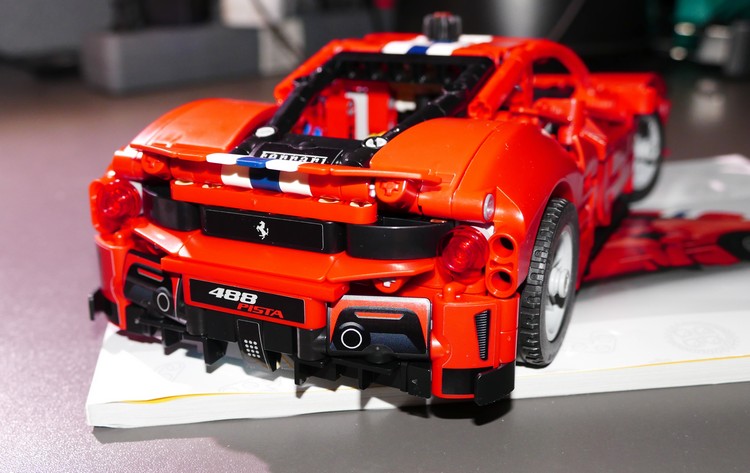
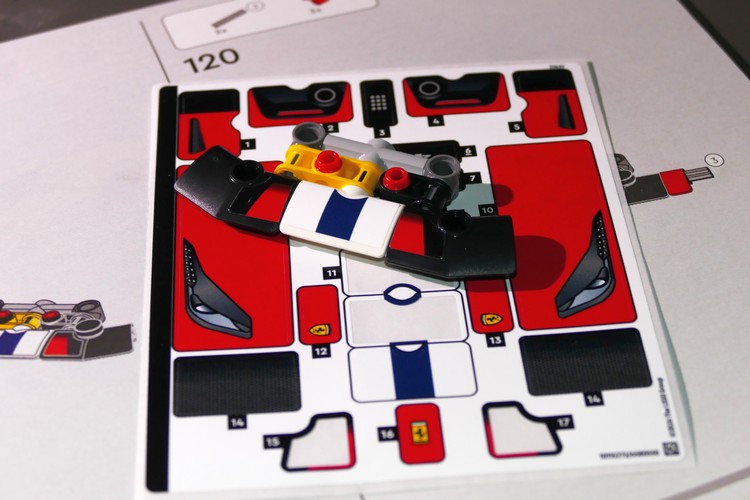
True, nothing is perfect, and some such features are simply “short-circuited” using stickers, of which there is no scarcity here. At one or two steps I got a feeling that they are slightly overused: nothing wrong in having a famous logo and a few pretty details around the car, but the hexagonal mesh at the front intake is perhaps going a tad too far, as if the sticker sheet had a fixed minimal size and something had to be “invented” to use it fully. But again, these do not noticeably disturb the smile one gets from assembling the bodywork.
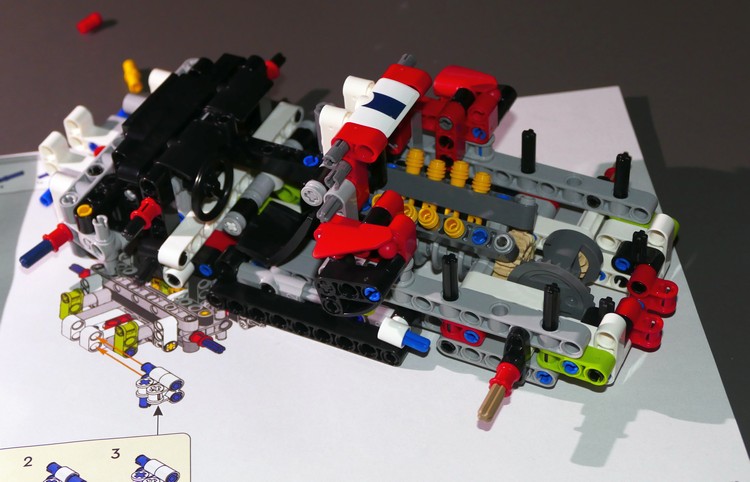
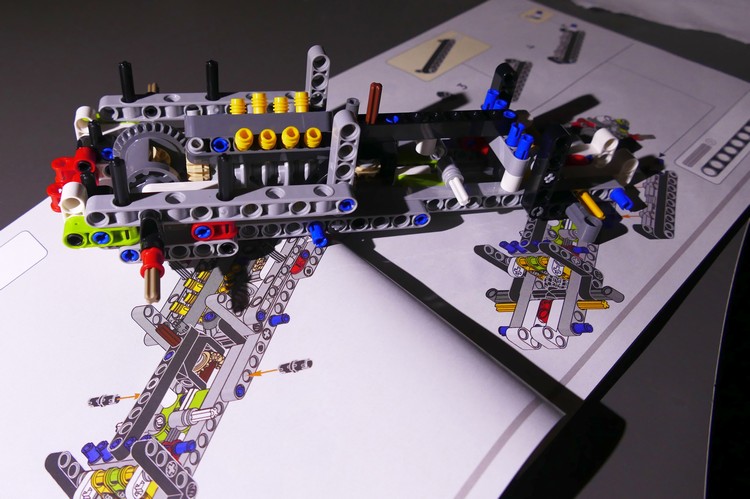
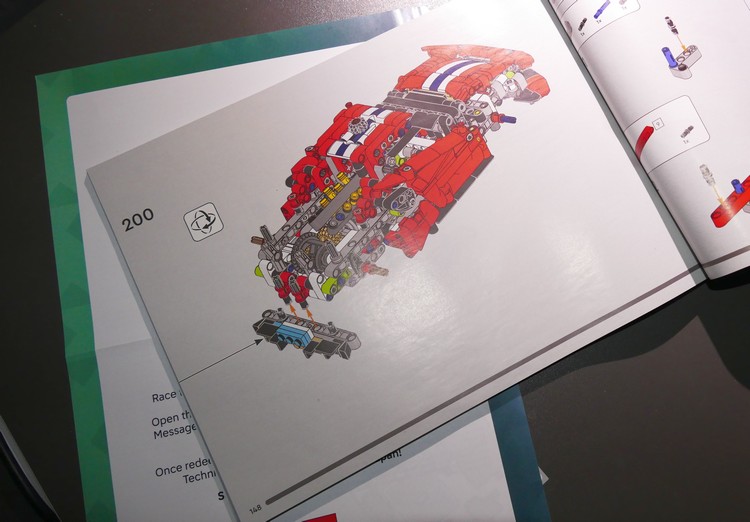
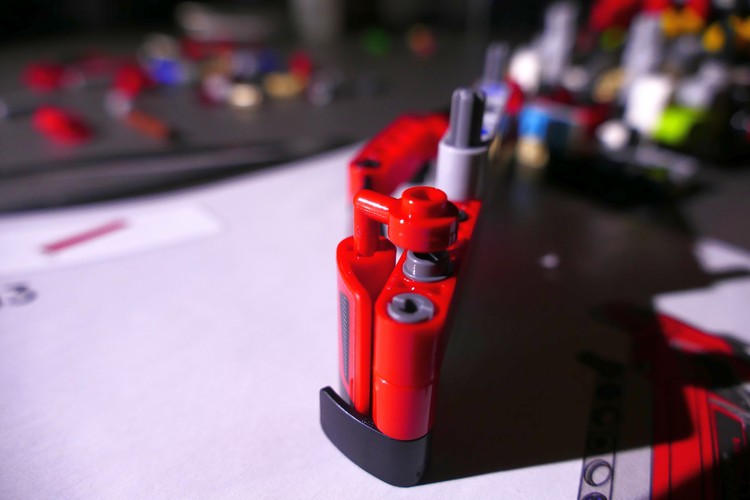
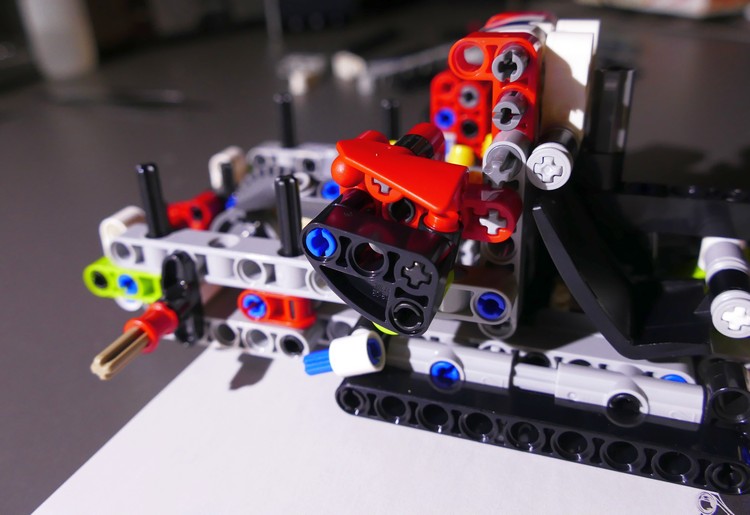
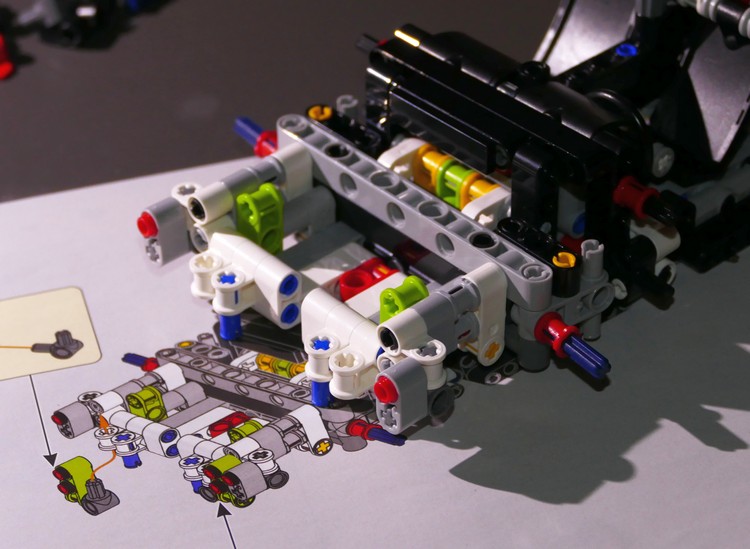
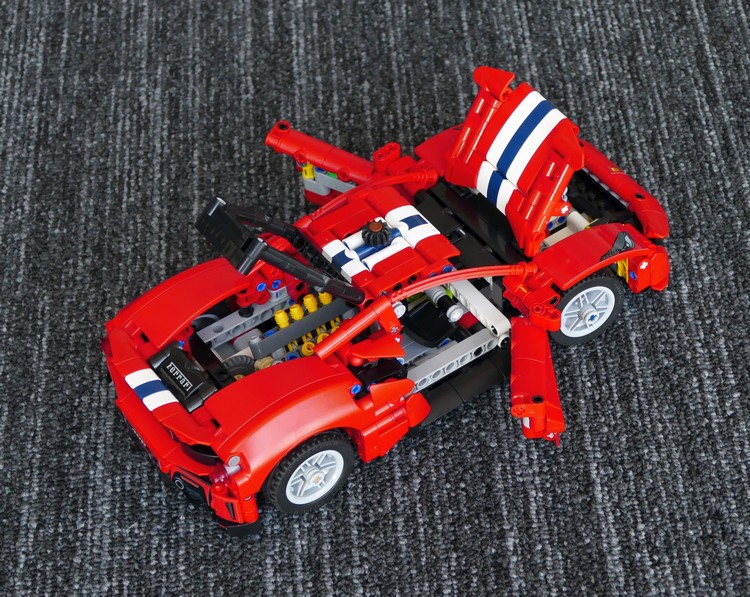
Mechanically, regardless of the aforementioned tricks, 42235 is not at all difficult to build. No ambiguities, no unclear parts and, to the contrary: a few very satisfying steps where large components get connected and are secured with an axle weaving them together. This results in a car that offers Hand-of-God steering (the steering wheel inside the cabin remains static), a working V8 engine with mini pistons driven by the back wheels via a differential, and openable hood, trunk and doors.
Don’t think of me as a fanatical purist: I actually mean it as a good thing when I say this car has a fair share of System parts spread around various places where they serve those particular visual requirements. Mostly mini slopes and curves dealing with bodywork in some spots where pure Technic would have been too bulky or imprecise. Using System parts effectively in Technic is a very nice skill, which I must admit I myself never truly mastered.
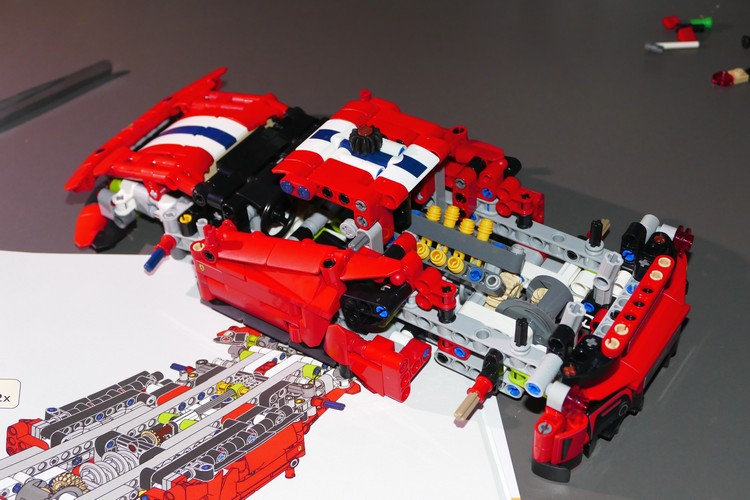
All this implies some compromises, of course: if the set wasn’t so insistent on following these precise curves and shapes of the real Ferrari, there could have been more space for some more mechanical features, but there is no perfect sweet spot in this balance that would satisfy everyone, and so I don’t think that is something to criticize.
What I think is a harder question, however, is the concept itself. It risks being described as “Technic Lite”: somewhat predictable elementary features, nothing mechanically astonishing, no brave ventures. Mechanical features that satisfy a Ferrari fan or a general builder, so-to-speak, but not to impress a Technic fan. (A sculpting fan yes - but this set is branded as Technic, so Technic criteria apply primarily.) This is not really a new line of thinking: it resurfaces time and again, and I can still remember discussing the very contrast between the 8653 Ferrari Enzo (another Ferrari, indeed) and the 8070 Supercar with some Technic afficionados. These sets are of roughly the same size and the same number of parts, but while one feels Enzo compromised some mechanical features for greater fidelity, the Supercar did the opposite, in true Technic spirit. This, at the end of the day, is not about the set itself, but about the individual buyer’s expectations from it.
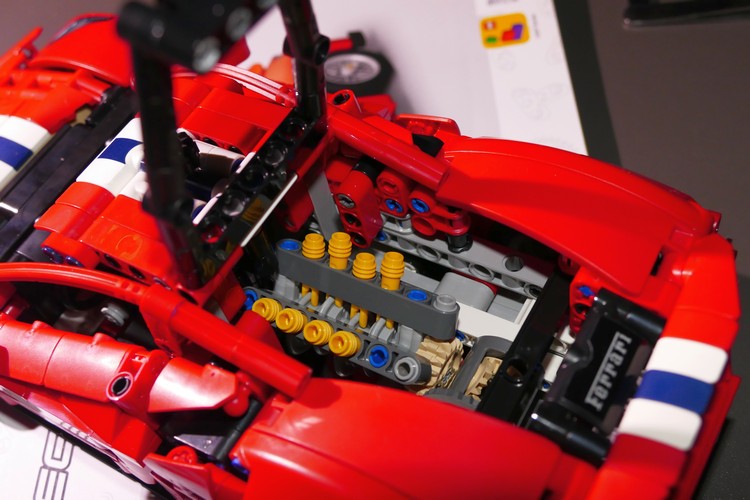
Nit-pickier among Ferrari fans will have their remarks, too. While the white-navy-white stripe along the center of the bodywork is true to the original to the extent allowed by Technic parts, the grey half-width bushings atop the grey wheel rims are just ghastly. If they really had to be there, black rims with yellow bushings (which would represent the Ferrari logo which the real 488 has) would have been a good-looking alternative. Speaking of the stripe, personally I would have been completely happy to pay a few percent higher price to get the required red alternate parts and have the option to build the fully red bodywork instead of the striped one. As usual, those annoyed by the hand-of-God steering knob disturbing the aerodynamic sleek contour can very easily just pull away, and reinsert it as needed.
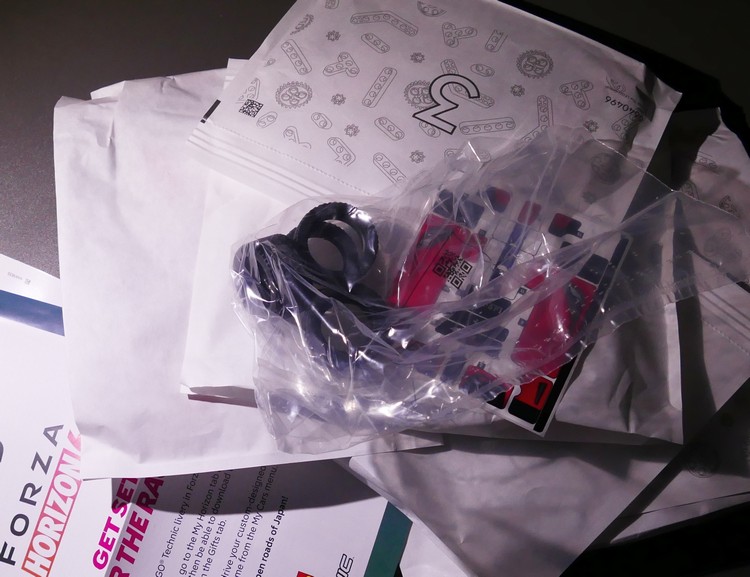
From the standpoint of a parts supply set, what you get is exactly what you see. Reasonable amount of red panels and curved parts, interspersed with some white and a bit of dark blue, and lots of usual Technic monochromes: bluish grays, some black, some white building material. Among mechanical parts, eight small engine pistons along with four crankwheels are noteworthy, as well as the standard differential and several gears. There is also a handful of interesting connectors.
To sum up: thumbs up or down? Depends, once again, on what you need from a set. If you are a Ferrari fan whose home is already 95% red from all the Ferrari merchandise, or you are looking for a gift for such a person, or you just like medium-sized Technic cars which are not difficult to build, just go ahead. However, if complex mechanisms or exotic parts is what you’re after, there are probably better sets to procure with the 64,99€ (at lego.de) in question.
We thank LEGO for sending this set for a review. However all the opinions above are purely HispaBrick’s, and are not goaded by LEGO.
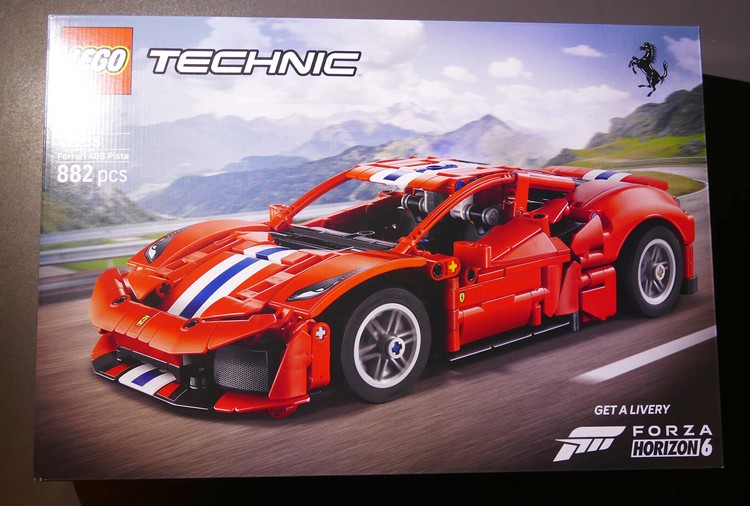
Number of parts: 882
Age: 9+
Dimensions: 28 x 13 x 8 cm
Goodies: Forza Horizon 6 game livery

33740